Budding Farmer Market
Schools today are finding innovative ways to combine classroom learning with real-world skills. The Budding Farmer Market teaches students the value of money, entrepreneurship, and sustainability through hydroponic farming.
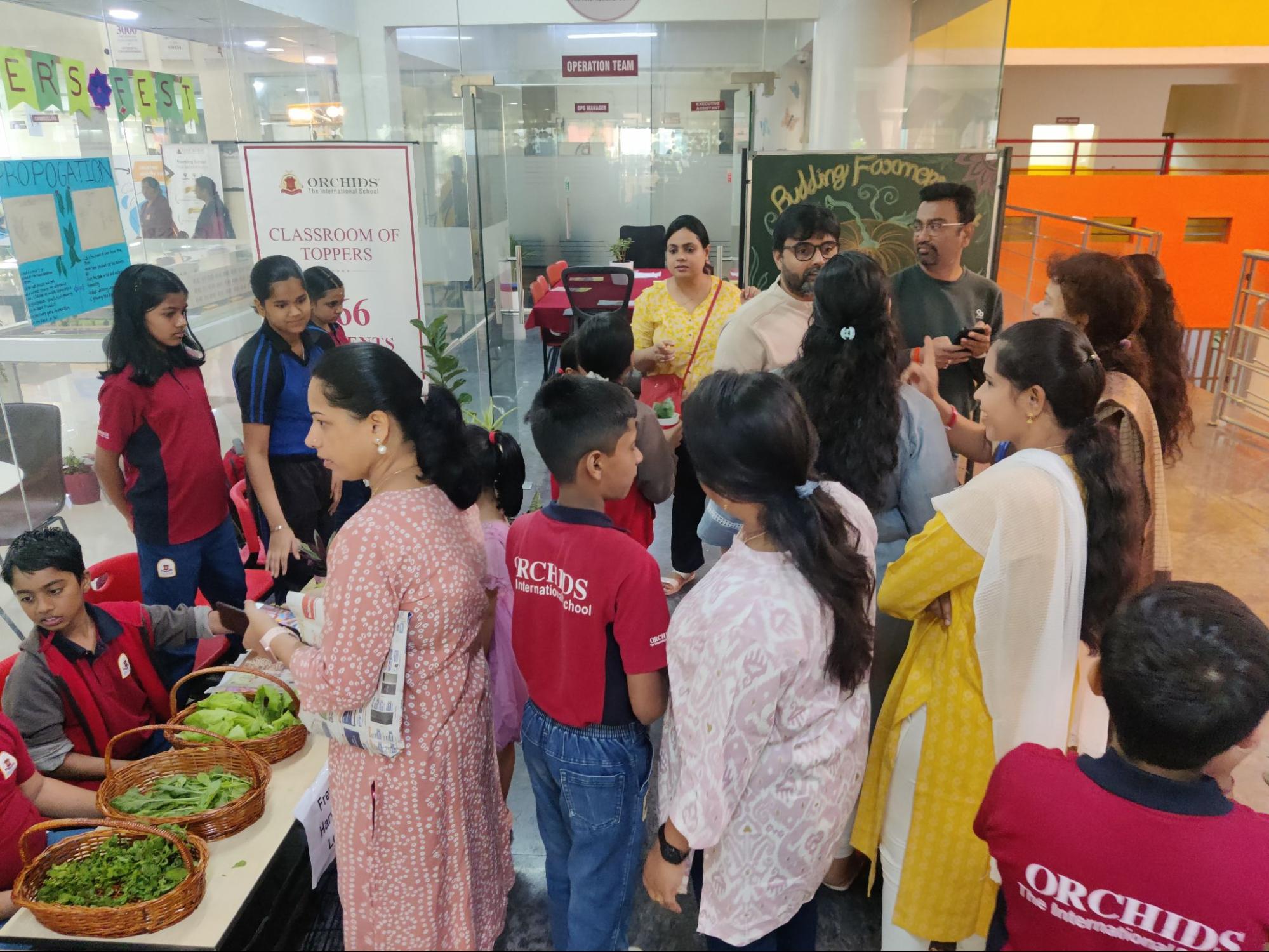
Students entrepreneurship in action at the Budding Farmer Market
Learning Beyond the Classroom
Inside the school's polyhouse, students cultivate leafy greens and herbs using soil-free hydroponic systems that recycle water and deliver nutrients directly to the roots. This innovative approach provides not only fresh, healthy produce but also teaches valuable life skills.
Hydroponics Efficiency by Numbers
Compared to traditional farming
Critical for water-scarce regions
Per square meter vs soil farming
Harvesting the Produce
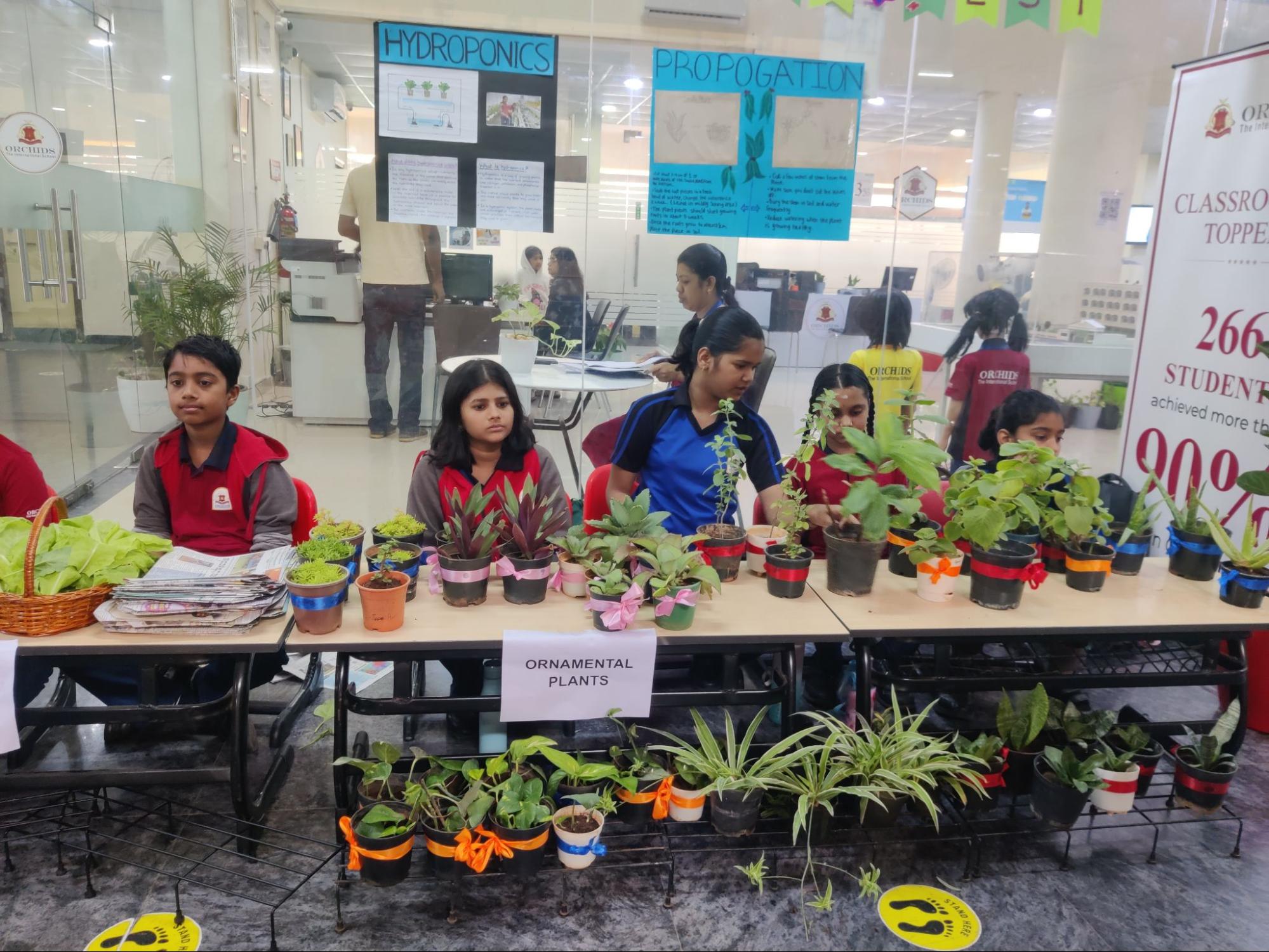
Once the crops are ready, students prepare for their farmer market. They design posters, set up stalls, and greet parents with fresh produce for sale. On average, each student group manages to grow 7-8 kilograms of spinach or lettuce per cycle, selling them at ₹30–₹40 per bunch.
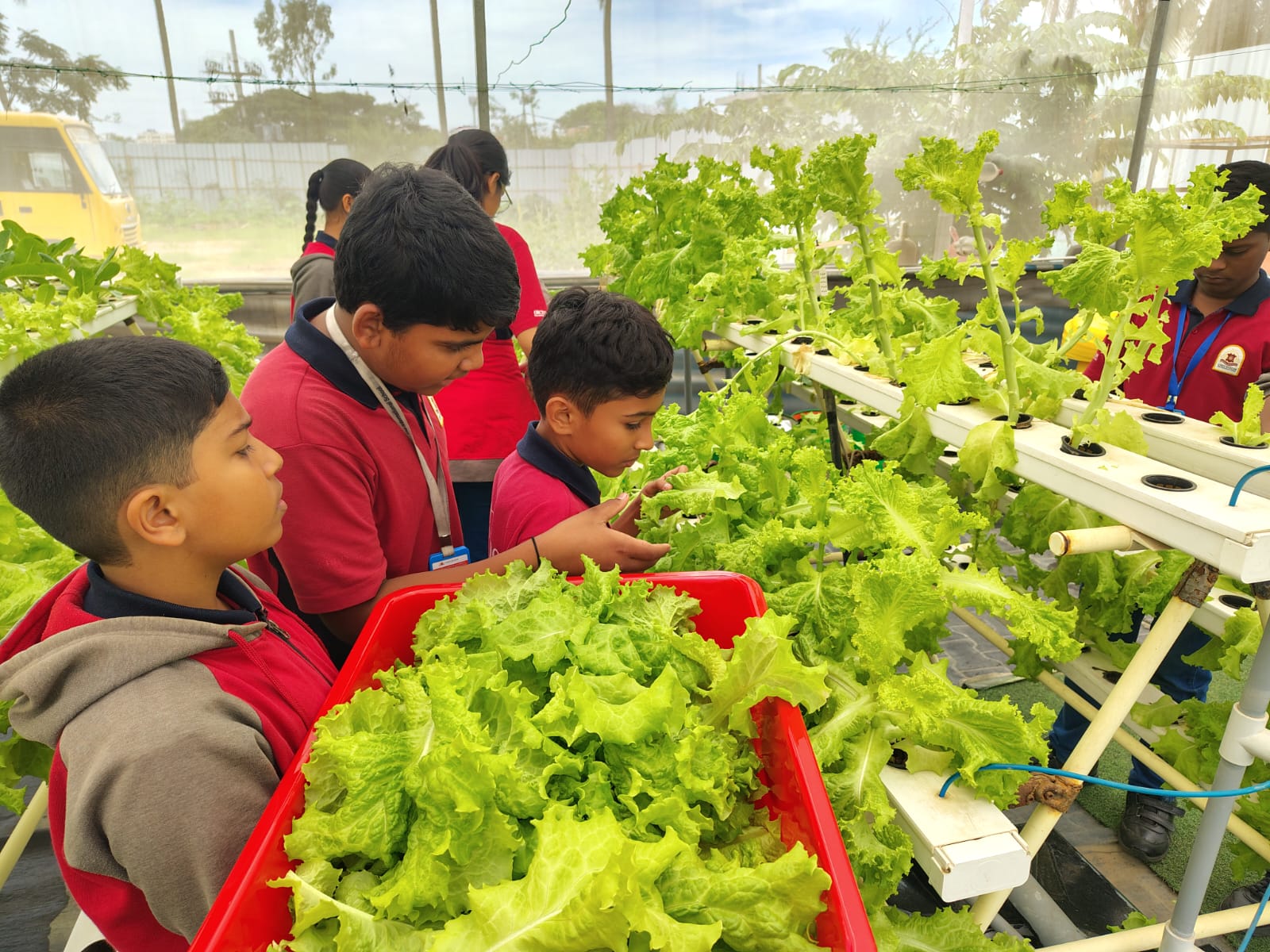
Fresh lettuce ready for harvest
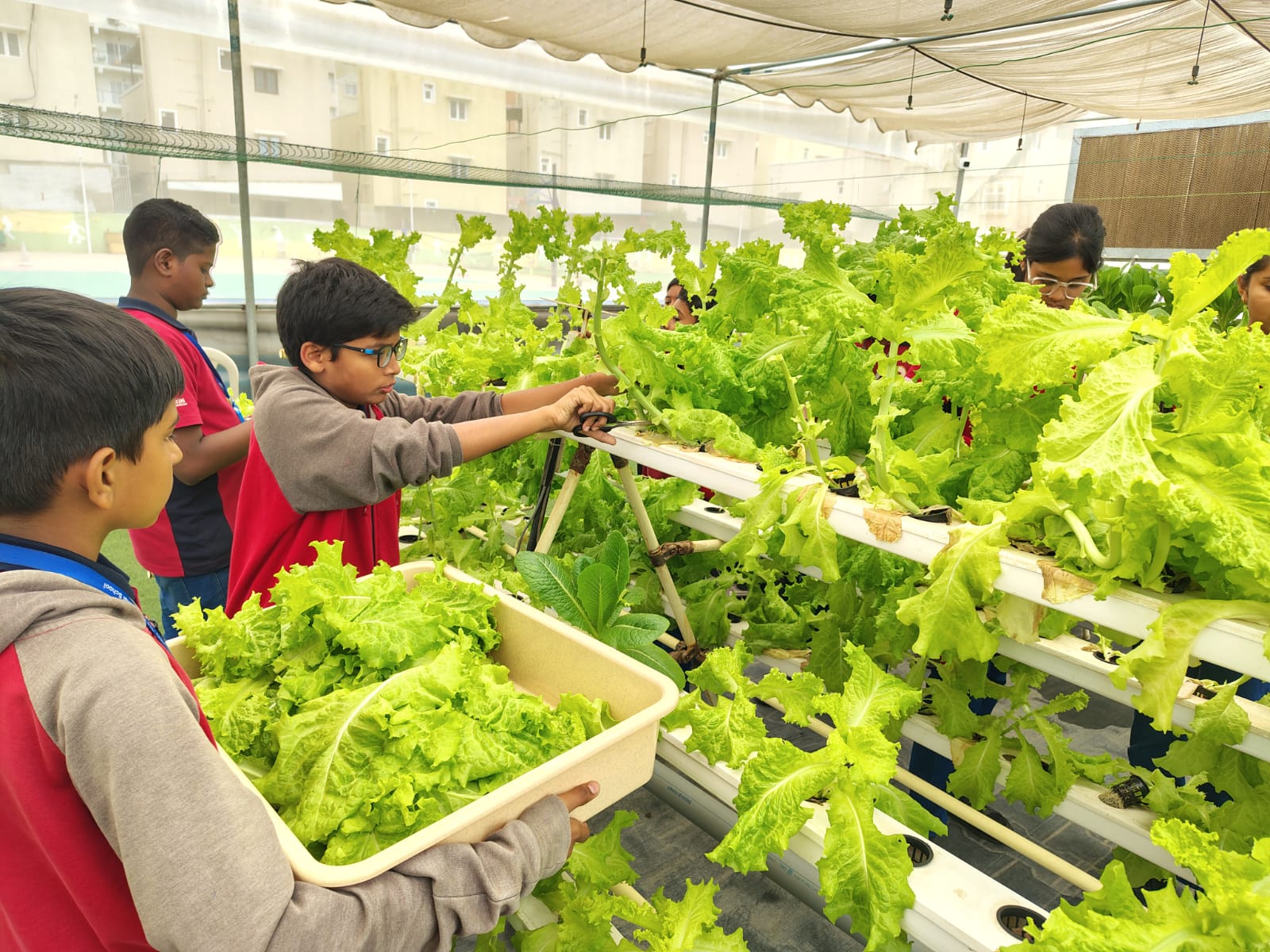
Monitoring plant growth and health
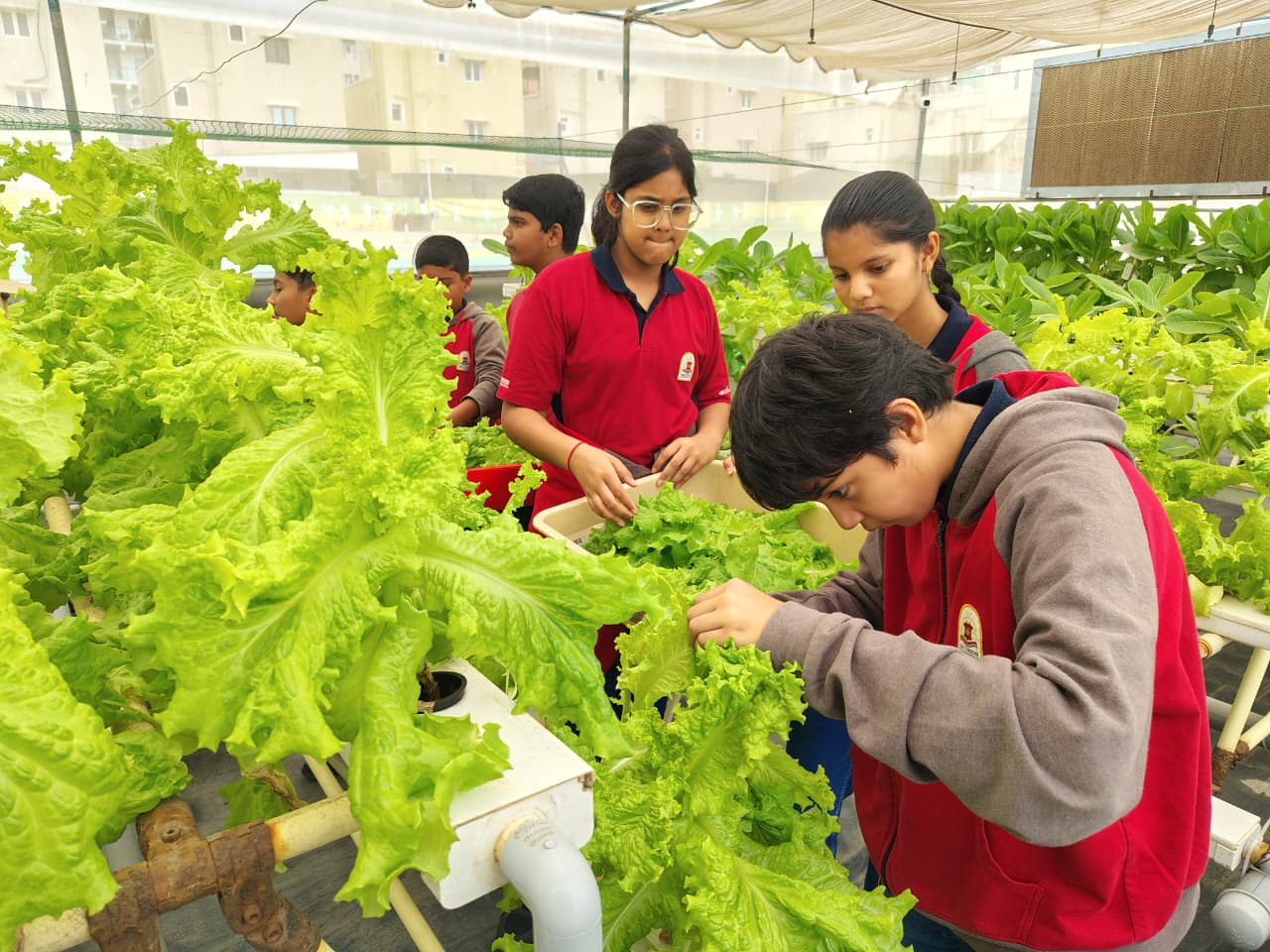
Careful harvesting technique
From pricing and customer service to maintaining expense and profit records, children experience every step of the entrepreneurial process.
Building Financial Literacy
The Budding Farmer Market directly links science to financial literacy. Students learn real-world business concepts through hands-on experience.
Initial Investment
Seeds, nutrients, and packaging materials for one cycle
Sales Revenue
Total income from selling produce to parents
Profit Margin
Exceptional returns reinvested for the next growing cycle, ensuring long-term sustainability
Through this process, students learn about:
Budgeting Costs
Planning expenses for seeds and materials
Breakeven Analysis
Recovering investment after 20-25 bundles
Savings & Reinvestment
Ensuring long-term sustainability
Teachers report that 85% of participating students showed improvement in teamwork, confidence, and decision-making. Some even experimented with ideas like "combo packs" of herbs, seasonal discounts, and loyalty offers.
Students Selling the Produce
The market day transforms students into confident young entrepreneurs as they interact with parents, explain their growing process, and handle transactions.
Presenting fresh produce with confidence
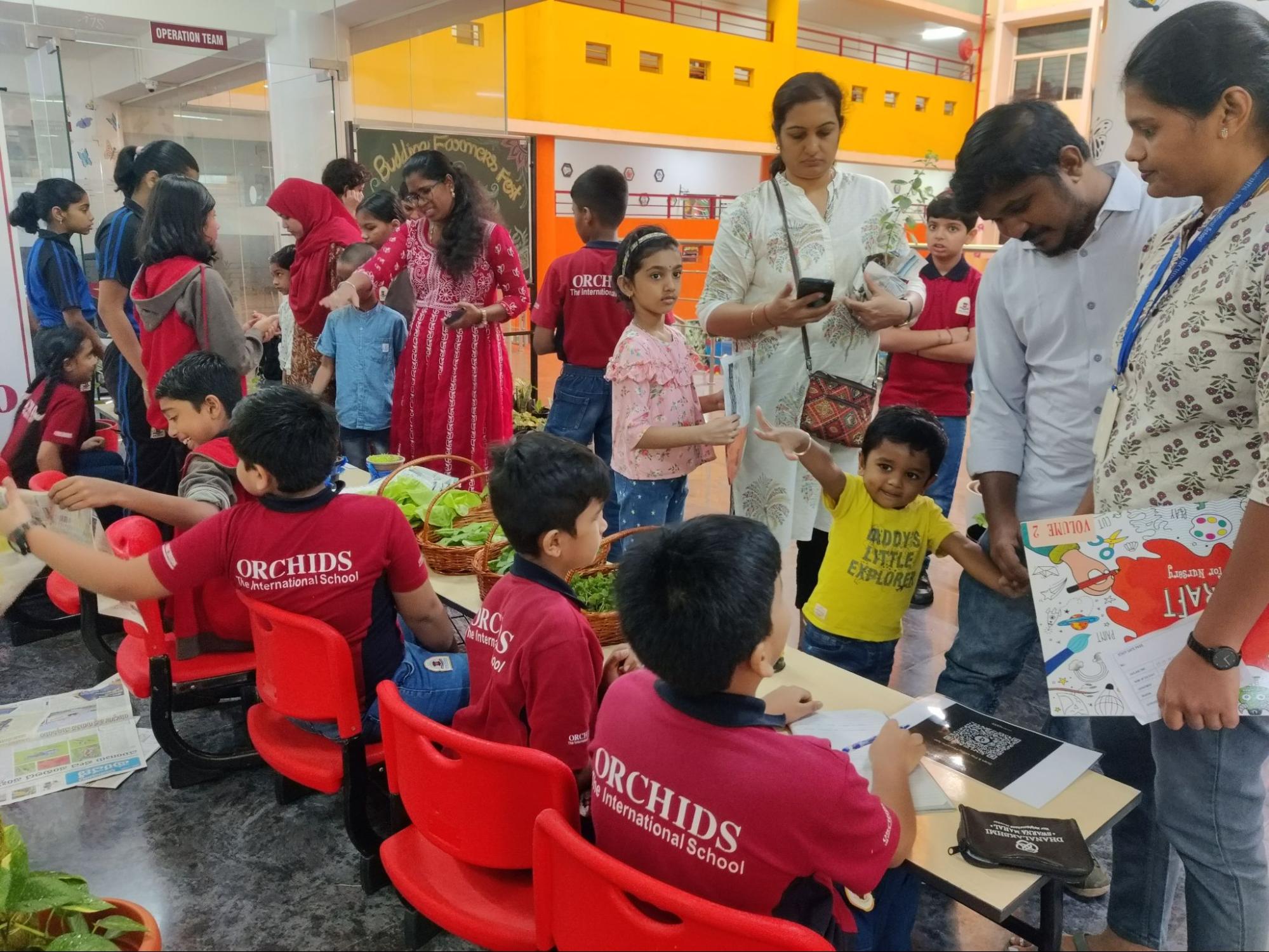
Beautifully arranged market stall
Customer engagement and sales skills
Pride in their entrepreneurial success
A Step Towards Sustainability
The project also emphasises environmental responsibility, teaching students about resource conservation and sustainable practices.
Water Conservation
One hydroponic system of just 1 square meter can save up to 100 litres of water per crop cycle compared to soil farming.
Pesticide-Free
Vegetables are 100% pesticide-free, ensuring safe and healthy food for families and promoting organic farming practices.
Carbon Footprint
Children became more conscious about food wastage and explained how hydroponics can reduce carbon footprints by promoting local produce.
In fact, surveys showed that 70% of parents felt more encouraged to grow small kitchen gardens after attending the Budding Farmer Market.
Initiative from Other Schools
This initiative is part of a growing global trend where schools are embracing hydroponic farming as an educational tool:
Green Our Planet (USA)
Students sell hydroponic produce, raising $50,000+ annually for school programs, demonstrating the scalability of student-run farming enterprises.
Ashwaubenon High School (Wisconsin, USA)
Produces 800 pounds (360 kg) of fresh salads monthly, serving them in the cafeteria and reducing food costs while providing nutritious meals.
Government High School, Mangaluru (India)
Uses hydroponics for midday meals, saving 50% water and ensuring nutritious food for students, showcasing local innovation.
These examples highlight that hydroponic farming in schools is not just about growing plants—it's about growing responsible, financially literate, and environmentally aware citizens.
Conclusion
The Budding Farmer Market transforms students into young farmpreneurs. By sowing seeds, harvesting crops, and selling their produce, children gain practical financial skills alongside environmental consciousness.
Impact Summary
With hydroponics showing yields that are 10x more efficient and profits of over 150% per cycle, the initiative proves that learning by doing leaves deeper roots. As schools worldwide explore hydroponic farming, the Budding Farmer Market stands as a reminder that the classroom is not confined to four walls; it can be a marketplace of ideas, innovation, and growth.
Join the Budding Farmer Movement
Experience how our students are becoming young entrepreneurs through sustainable hydroponic farming and real-world business skills.
Explore Horticulture DepartmentGrowing entrepreneurs, harvesting success 🌱💼