Plastic Money, E-Money & Scam Safety: Teaching Kids to Be Smart and Safe with Digital Payments
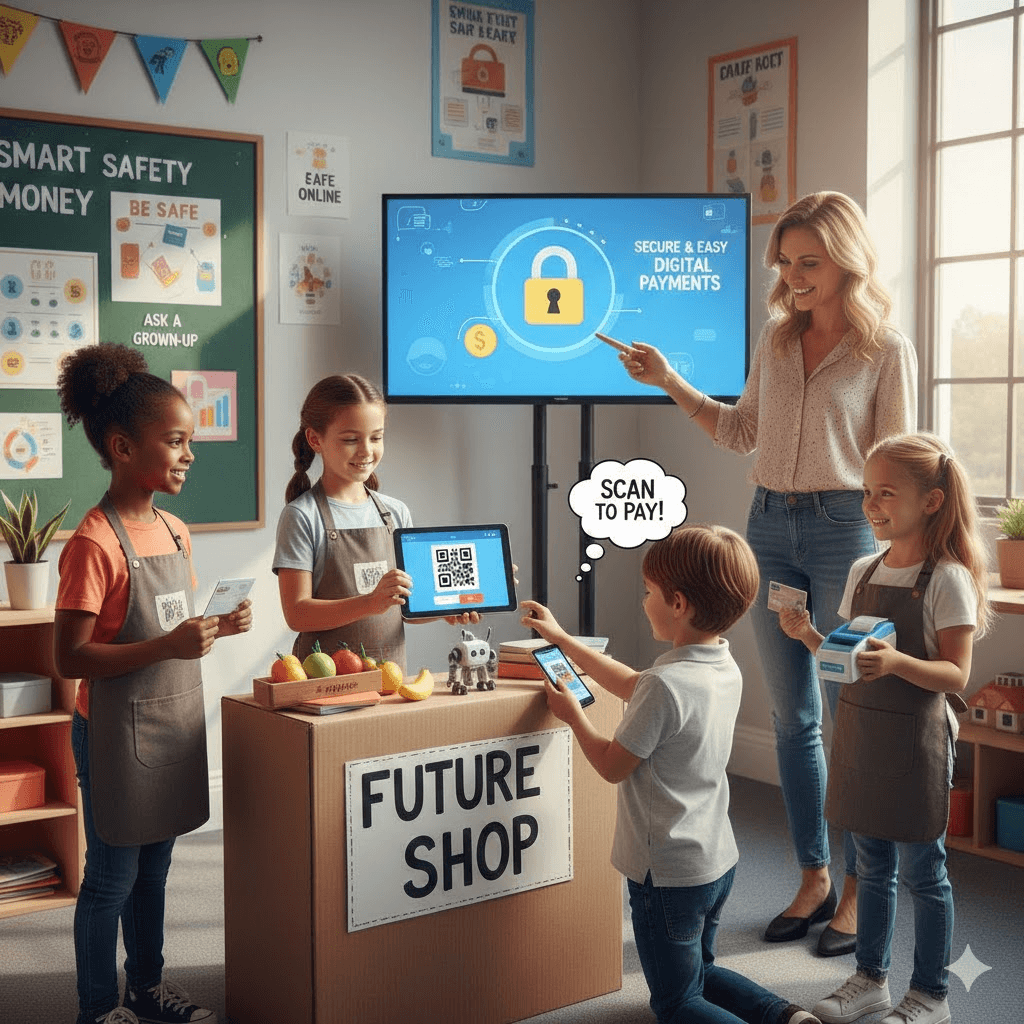
A few years ago, money was generally carefully folded notes in a wallet or coins in a bag. These days, money is tapped, scanned, swiped, and transferred in a matter of seconds on displays. Students watching their parents use applications to pay bills, place online grocery orders, and get fast cashbacks.
The way we earn, spend, and save money changed as a result of the transition from cash to plastic and electronic money. It is easy, but it also involves risk and responsibility. It is no longer a difficult concept to teach children how digital money functions and how to avoid scammers. It's an important life skill.
A Classroom Moment That Changed the Lesson
I posed the basic question, "Who here has seen their parents pay using UPI or cards?" during a Grade 5 lesson on digital payments.
Nearly all of the hands raised.
"Ma'am, when my father paid online, he got cashback," said one student, Riya. It seemed like free cash!
"I help my mother check offers on different apps," said another student. There are situations where one app is less expensive than the other.
"What about safety?" I then asked. Has anyone come across a scam or fake message?
"My grandmother got a message saying she won a prize," the child stated softly, raising his hand. I encouraged her against clicking the link. I discovered that scammers manipulate people.
That moment perfectly described the importance of this subject. Children are watchers, learners, and occasionally family protectors in addition to being digital currency consumers.
Understanding the Basics: Plastic Money, E-Money & Scams
Children need guidance before they can use digital money responsibly.
Plastic Money
Debit cards, credit cards, prepaid cards, and ATM cards are examples of plastic money. Students immediately relate to these when they see them used in stores and ATMs.
E-Money
UPI payments, digital wallets, net banking, gift cards, and online transactions are all examples of e-money. It is quick, paperless, and frequently offers incentives like cashbacks and discounts.
Scam Awareness
Attempts to mislead people into parting with money or personal information are known as scams. They frequently appear as:
- Fake prize messages
- Unknown links
- OTP requests
- Fake bank calls
Teaching scam awareness seeks to encourage confidence and caution rather than fear.
What We Teach: Real Financial Skills for Real Life
Our focus is not on definitions alone, but on everyday application.
1. How Digital Payments Work
Students learn:
- How money moves from a bank account to a shop
- What happens when a card is swiped or a QR code is scanned
- Why OTPs and PINs must be kept secret
When a child understands the process, they automatically become more careful.
2. Benefits of Digital Payments
Children explore:
- Cashbacks
- Discounts
- Reward points
- Convenience
One student reported receiving cashback after making an online payment, which he then used to purchase stationery. Students were able to view digital payments as tools rather than magic as a result.
3. Spotting Scams
We teach children to recognize red flags such as:
- "You have won a prize" messages
- Urgent threats like "Your account will be blocked"
- Poor spelling or strange links
Students learn a golden rule: If something feels too good to be true, it probably is.
4. Safe Digital Habits
Children learn:
- Never click unknown links
- Never share OTPs, PINs, or passwords
- Always check with an adult
- Avoid scanning QR codes from strangers
These habits often travel from the classroom straight into homes.
How We Teach: Making Learning Interactive and Fun
When children are involved, they learn the most. Here's how we make this subject come to life:
1. Role Play
Students act as:
- Customers
- Shopkeepers
- Bank officers
- Scammers
Children learn about safe and risky situations in a controlled setting through role play.
2. Activities
Students can recognize phony messages and suspicious connections by playing games like "Spot the Scam." They are kept interested and aware by this detective-style activity.
3. Worksheets
Worksheets include:
- Matching safe vs unsafe actions
- Filling in steps for a safe payment
- Identifying scam messages
These reinforce learning in a structured way.
4. Videos
Short animated videos explain:
- How digital payments work
- How scams happen
- How smart users stay safe
Visual storytelling makes complex ideas easy to remember.
5. Storytelling
Lessons are made relatable and personal by experiences of children helping parents, seniors avoiding fraud, and families saving money by making wise decisions.
Benefits for Students: Skills That Last a Lifetime
Teaching plastic money and scam safety offers powerful benefits:
1. Early Financial Awareness
Children learn to understand the value of money and understand it beyond just currency.
2. Digital Safety
Before clicking or sharing information, they are taught to stop, consider, and double-check.
3. Smart Decision-Making
Children explore offers, compare costs, and consider their options before making an order.
4. Confidence
Students feel comfortable using digital tools responsibly rather than being afraid of them.
5. Family Impact
Many students bring what they've learned home with them, alerting parents and grandparents to fraud.
Real Stories from the Classroom
The Cashback Explorer
A student proudly said, "Ma'am, I paid online and got cashback. I saved that money!"
The Discount Finder
Another shared, "I asked my mom to check different apps. We found the same product cheaper."
The Scam Protector
One child explained how he stopped his grandmother from clicking a suspicious link.
The Careful Observer
A student noticed shoes worth ₹2,000 being sold for ₹99 and said, "I didn't buy them because it didn't feel right."
These stories prove that learning is happening beyond the classroom.
Building Smart, Safe Digital Citizens
E-money and plastic money are a part of everyday life, not merely a way to make purchases. We prepare kids for a time when financial decisions will be made quickly, digitally, and continuously by teaching them how to utilize them properly.
Children who acquire these abilities:
- Spend sensibly
- Stay alert
- Help their family members
- Make wise decisions
Most importantly, they develop into self-assured, responsible, and financially conscious individuals.
Knowledge is the best protection in a world where money travels at the speed of a click, and it starts early.
Start Your Child's Financial Journey Today!
Join our Financial Literacy program and empower your child with essential money management skills. From saving habits to entrepreneurship, we're building the next generation of financially smart leaders.