Geminids Meteor Shower 2025: Witness a Sky Full of Shooting Stars
Have you ever wished upon a shooting star? This December, the sky is giving you the perfect opportunity. The Geminids meteor shower 2025 is on its way — and astronomers around the world predict that this will be one of the most breathtaking meteor displays of the year.
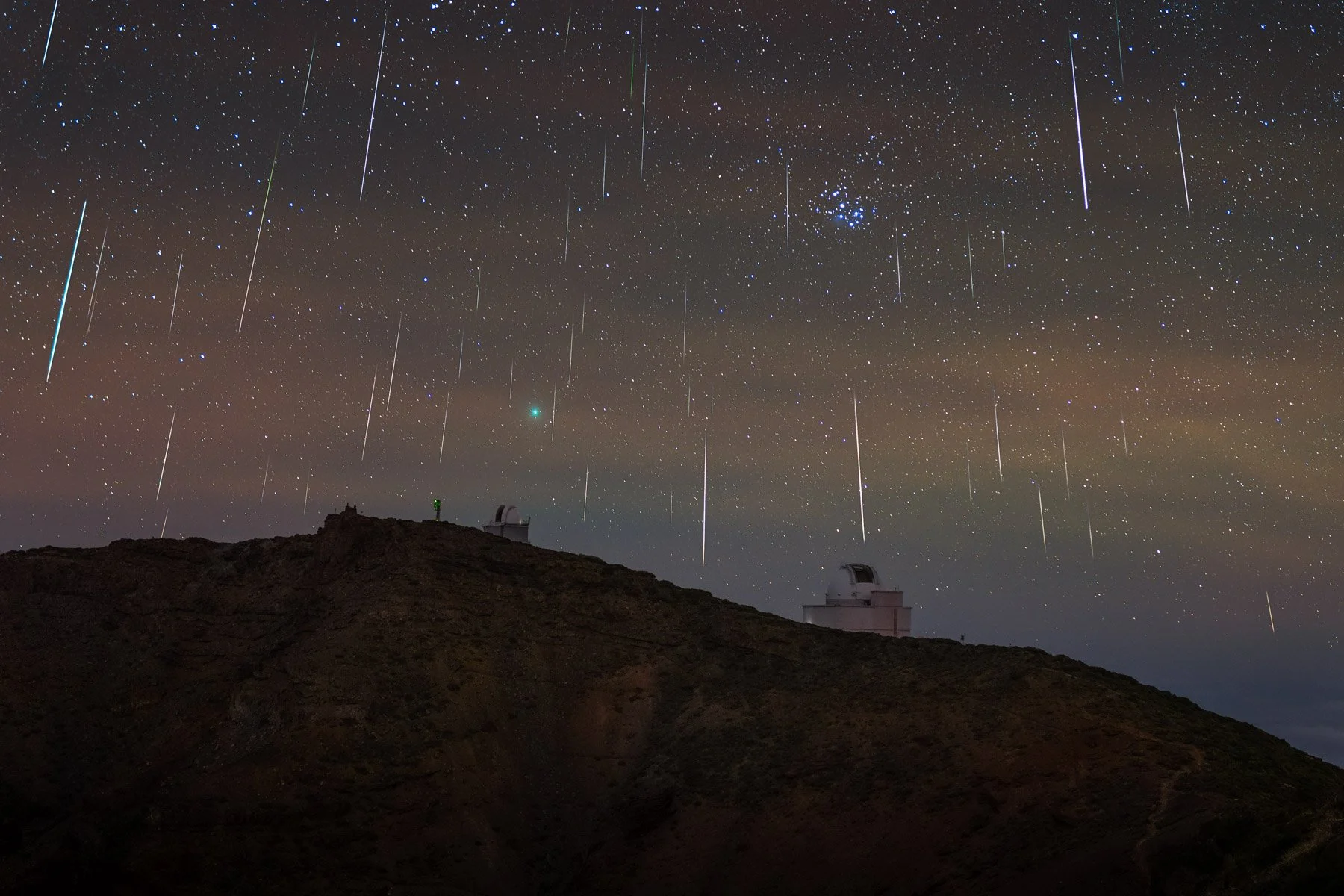
Geminid Meteor Shower 2018. La Palma, Canary Islands
Credit: Alyan Wallace
Whether you're a space enthusiast, a romantic night-sky dreamer, or someone who loves bucket-list experiences, the Geminids meteor shower is for everyone. You don't need telescopes, binoculars, or scientific knowledge — just a clear sky, a comfortable place to lie down, and a little curiosity.
Let's explore everything you need to know, why 2025 could be extra special, how to watch them (especially from India), and what to expect. We've sprinkled in some fun tips and ideas to make your meteor-watching night as memorable as possible.
What Are the Geminids? And What's Unique in 2025?
Most familiar meteor showers come from comet trails of ice and dust that burn up as they cross Earth's orbit. But the Geminids meteor shower is different. Their parent object is not a comet, but a rocky asteroid: 3200 Phaethon. That makes this shower one of the few major meteor displays not tied to a comet.
As Earth moves through the debris stream left behind by Phaethon, those rocky fragments plunge into the atmosphere, burning up and creating the sparkling streaks we see as meteors. Because Phaethon's debris tends to be denser than typical comet dust, the meteors from Geminids often appear brighter and more vivid.
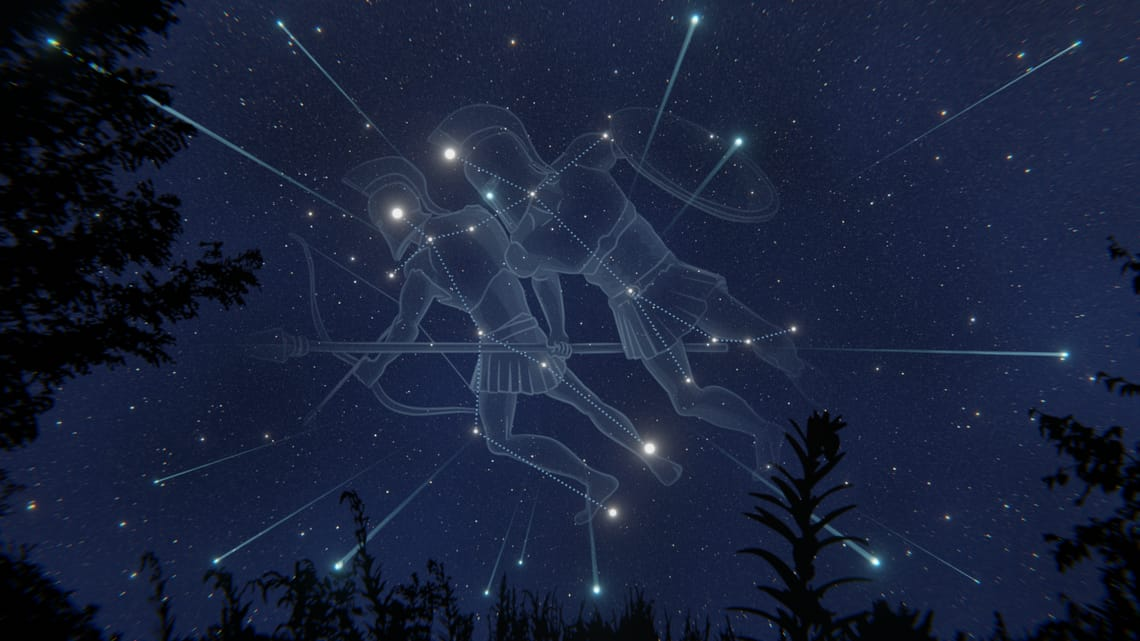
A stunning capture of the Geminid meteor shower at the Hanle Dark Sky Reserve, Ladakh.
Image credit: Dorje Angchuk
Why December? And Why 2025 Might Be Extra Special?
The Geminid meteor shower is an annual event. The shower becomes active in early December and usually continues until mid- to late-December. In 2025, the peak night is expected to be December 14–15 (local time for most parts of the world). What makes it extra special is that we could see up to 120 meteors per hour, and some projections go as high as 150 meteors per hour, making this potentially the brightest meteor shower of the year.
NASA confirms that the Geminids meteor shower is the strongest and most reliable annual meteor shower, often producing very bright meteors and colourful fireballs.
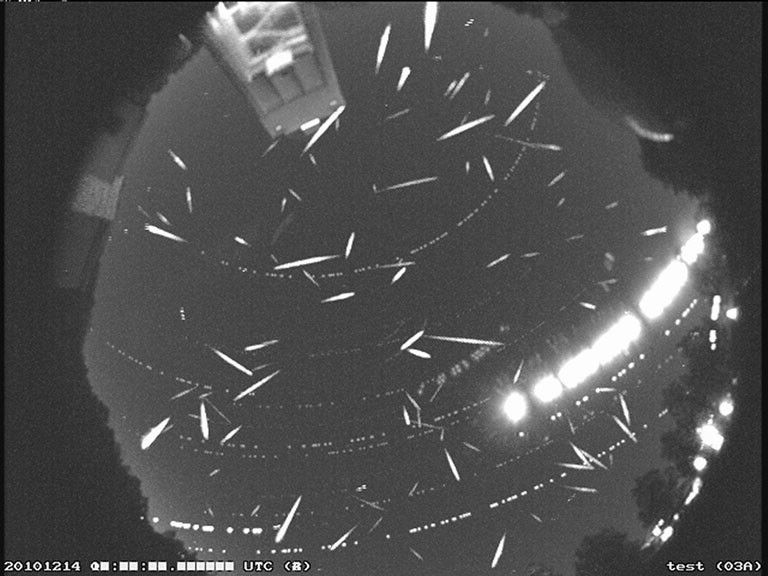
A composite photograph from the 2014 Geminid meteor shower captures more than 100 meteors streaking across the sky at its peak.
Credit: NASA/MSFC/Danielle Moser, NASA's Meteoroid Environment Office
Where Do the Meteors Come From?
The radiant — the point from which the meteors appear to originate — lies inside the constellation Gemini (The Twins).
However, keep this in mind: You don't need to look directly at Gemini to enjoy the Geminids meteor shower 2025. Meteors will streak across all parts of the sky.
To locate Gemini, you can use Stellarium!
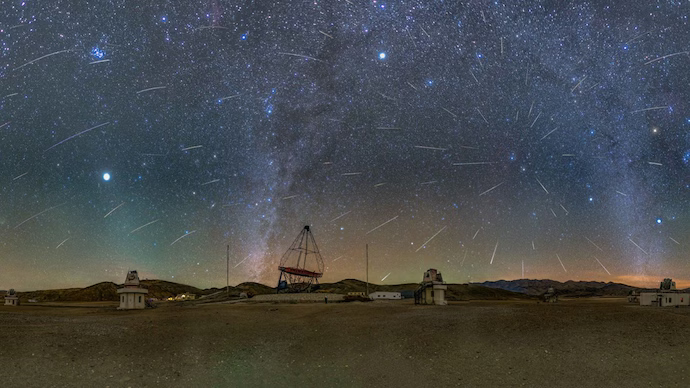
Radiant of the Geminid meteor shower; Gemini Constellation.
Credit: Starwalk
When and Where to Watch, Especially If You're in India
Key Viewing Information
- Peak date: Night of 14–15 December 2025
- Best viewing hours: From late evening (post-sunset) through pre-dawn, many meteors are visible around 1–4 AM local time when the sky is darkest, and the radiant is high
- Active period: Even outside the peak, the shower remains active for days, roughly 4–20 December 2025
Watching from India (or Near Mumbai)
Good news if you're in India: the Geminids should be visible across most of India. Locations away from city lights — rural villages, hills, or countryside — will give the clearest views.
Recommended local stargazing hours: around midnight to 4 AM on the peak night.
Some dark-sky or low-light-pollution areas outside major cities, hills, and rural escapes will amplify the spectacle. Even if you stay in or near a city, heading to the outskirts or less-lit areas will improve your chances.
What You Might See & What to Expect?
Meteor Count
Under ideal dark-sky conditions, possibly up to 100–120 meteors per hour (or even higher) during the peak night.
Brightness & Colours
Many Geminid meteors tend to be bright, sometimes even "fireballs." Colors may vary — white, yellowish and occasionally hints of green, red, or blue, depending on their chemical makeup and how they burn.
Radiant Point
The meteors appear to originate from the constellation Gemini, but they can streak across any part of the sky, so it's best to lie back and take in as wide a sky view as possible.
Spectacular Display
Under perfect conditions (dark sky, minimal light pollution, clear weather), you might even see meteors brighter than any nearby star, blazing trails that last a fraction of a second but leave a lasting memory.
Tips to Maximise Your Meteor-Watching Experience
To get the best out of the Geminid meteor shower and to truly enjoy the sky full of shooting stars, here are some practical tips:
1Find a dark spot
Light pollution drastically reduces visibility. Try to get away from city lights — countryside, hills, rural rooftops, and open fields.
2Give your eyes time to adjust
It typically takes 15–20 minutes for your eyes to adapt to complete darkness. Avoid using your phone's white light. Use a red flashlight if needed.
3Lie back with a wide view
Meteors can appear anywhere, not just near the radiant. Lie flat on the ground or use a reclining chair or mat.
4Warm clothes & comfort
December nights in many parts of India can be chilly. Carry a light blanket or warm clothes, and maybe some tea or hot cocoa, or chai.
5Be patient and stay a while
Even in a good shower, the meteors come in streaks. Staying at least 30–60 minutes increases your chances of catching bright ones or occasional fireballs.
6Avoid moonlight if possible
If the Moon is up, try to face away from it, which reduces its glare and improves visibility of fainter meteors.
A Cosmic Celebration
The Geminids meteor shower 2025 is more than just an astronomical event; it's a cosmic celebration. Whether you're a seasoned space lover or someone who simply enjoys beauty, this night will leave an imprint on your soul.
So on December 14–15, 2025, step outside. Look up. Let your eyes adjust. And watch as the universe paints a story in light, one meteor at a time.
Until then, keep your curiosity alive.
The stars are waiting!
Join Our Stargazing Community
Our Astronomy Department regularly hosts observation sessions during these spectacular events. Led by experienced faculty mentors and passionate student astronomers, these gatherings offer the perfect opportunity to witness cosmic phenomena through professional-grade telescopes while learning from experts.
Whether you're a curious beginner or an aspiring astrophysicist, our astronomy programs provide hands-on experience with cutting-edge equipment and real-world observation techniques. Join us in exploring the wonders of the universe!
Want to Learn More About Astronomy?
Explore our comprehensive astronomy curriculum and discover how we're inspiring the next generation of space scientists.
Explore Astronomy Department